
Video Surveillance
Thoughtful surveillance integration for better visibility and practical control.
En-Progress plans and integrates video surveillance systems for commercial and residential environments. Our approach considers camera placement, recording requirements, network connectivity, and the practical needs of the people responsible for managing the system.
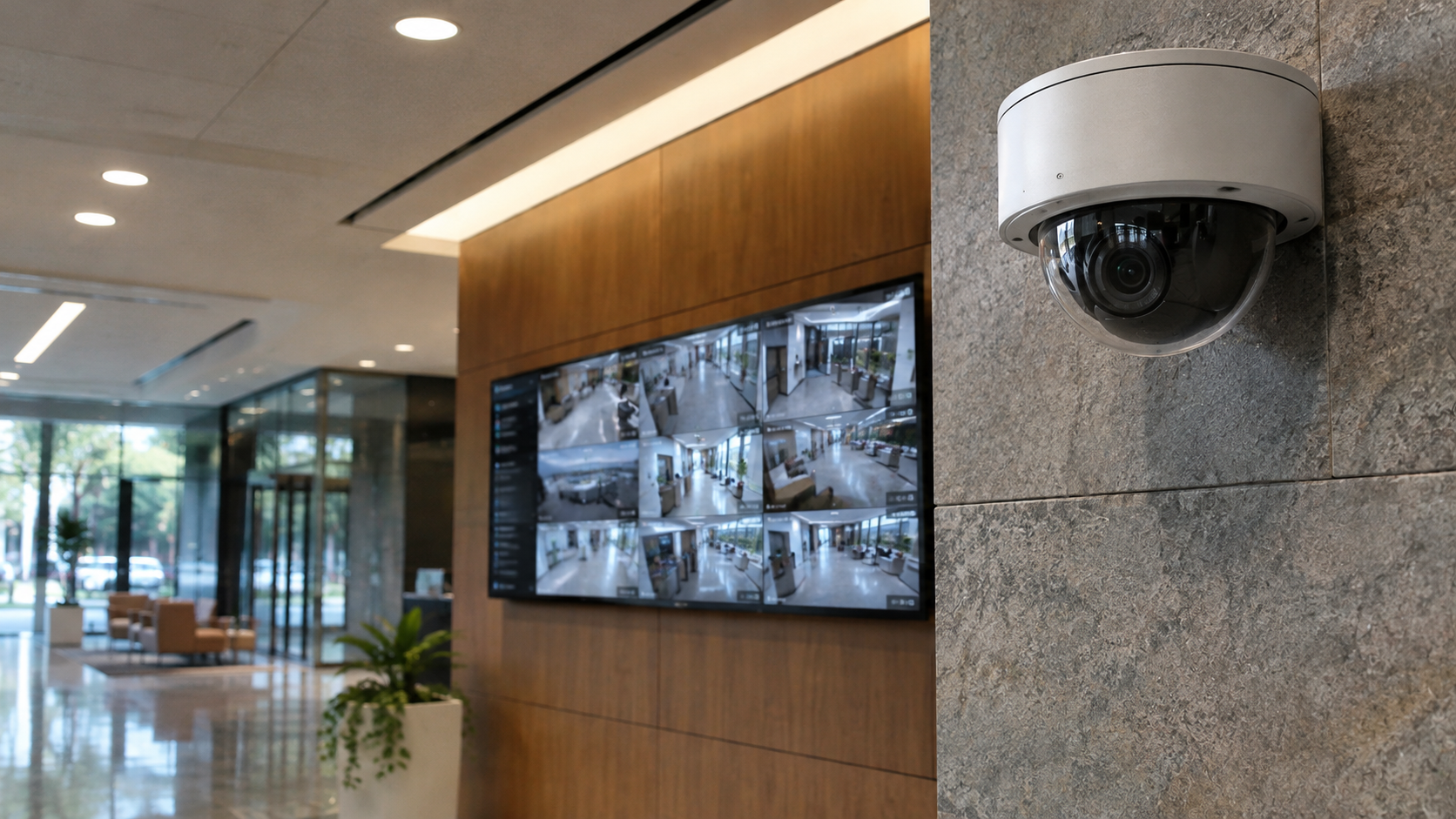
What We Plan and Integrate
Effective video surveillance begins with understanding the environment, the areas that require visibility, and how recorded information will be accessed and managed.
Camera Planning & Placement
Camera locations are considered in relation to entrances, circulation areas, operational needs, available infrastructure, and the physical characteristics of the property.
Video Recording & Management
Recording systems and video management software configured around project requirements, including footage access, playback, recording settings, and authorized user permissions.
Network & System Integration
Surveillance equipment coordinated with network infrastructure, switching, cabling, and the other technology systems serving the environment.
Configuration & Testing
System setup, camera and recording configuration, functional testing, and practical instruction to prepare the installation for everyday operation.
Surveillance Designed Around the Environment
Every property presents different requirements. The goal is to plan video surveillance around the way the building functions rather than simply selecting camera locations.
Commercial Environments
Restaurants, workplaces, educational facilities, retail environments, and other commercial spaces have different visibility and operational considerations.
En-Progress evaluates the environment, equipment requirements, and system configuration as part of a coordinated surveillance installation.
Residential Environments
Residential surveillance planning considers property layout, relevant areas of visibility, discreet equipment placement, and practical access to the system.
The objective is technology that fits the property and can be operated with confidence.
From Planning to Everyday Operation
Thoughtful integration involves more than selecting equipment. Our process considers how the technology will be installed, configured, tested, and handed over.
01 Understand the Requirements
Review the property layout, areas requiring visibility, existing infrastructure, and the intended use of the surveillance system.
02 Plan the Infrastructure
Consider camera locations, recording requirements, cabling pathways, networking needs, equipment placement, and installation conditions.
03 Install & Configure
Install the agreed surveillance equipment and configure cameras, recording components, and authorized user access according to project requirements.
04 Test & Hand Over
Verify camera operation, recording and playback functions, and agreed system settings. Provide practical instruction and any documentation included in the project scope.
Equipment placement considered in relation to the space and visibility needs.
Camera Planning
Connected Systems. Considered Together.
Recording configuration, playback, and authorized system access.
Recording & Management
Cameras coordinated with networking and low-voltage infrastructure.
System Integration
Functional verification and practical user instruction.